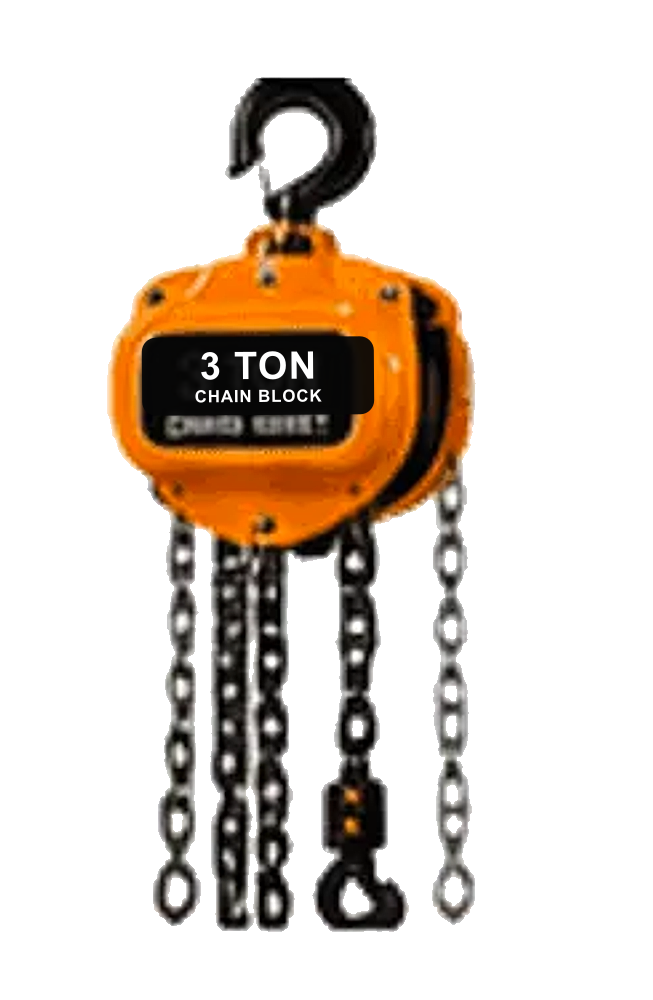
1. Use a Project Load Formula First
The simplest sizing method is: total lifted weight = item weight + rigging weight + fixture weight + packaging weight + realistic project allowance. This number is the starting point for chain hoist capacity selection. If the actual load is unknown, stop and verify it with drawings, nameplates, a scale or an engineer before choosing equipment.
A hoist capacity decision should never be based only on the main object weight. In real projects, spreader beams, lifting clamps, pallets, slings and temporary fixtures can add enough weight to push a project into the next capacity class.
- Confirm the heaviest real load, not the average load.
- Include every accessory that hangs from the hook.
- Treat unknown weight as a project risk, not a guess.
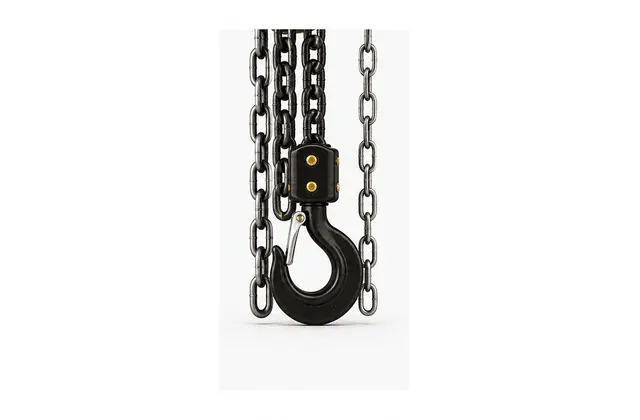
2. Match Capacity to WLL and Nameplate Rating
Working Load Limit, often shortened to WLL, is the maximum load intended for the hoist under specified conditions. Safety rules in many markets require the safe working load to be marked on the hoist, and that marked load must not be exceeded. In practice, a 2 ton chain hoist is not a 2.1 ton project hoist.
Choose a standard size above the total lifted weight: 0.5T, 1T, 2T, 3T or 5T for common industrial projects. If the load sits very close to the nameplate rating, choose the next capacity or ask for engineering review.
- Rated capacity is a limit, not a target to push past.
- Do not rely on proof test numbers as daily working capacity.
- Keep the nameplate readable for operators and inspectors.
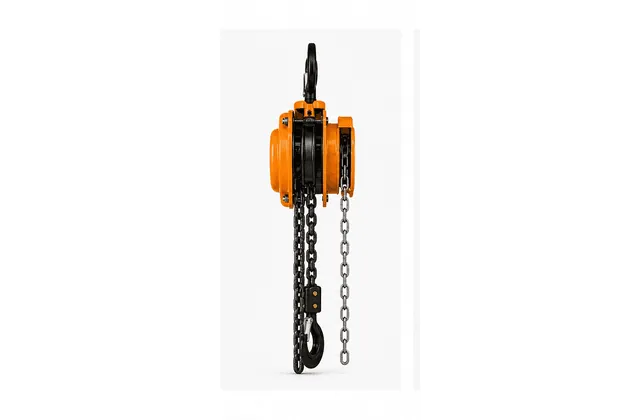
3. Step Up for Duty Cycle, Uncertainty and Site Conditions
Two projects with the same weight can need different hoist capacities. A clean maintenance job lifting 1.8 tons once a month is different from a production line lifting near capacity every shift. Repetition, long lift height, outdoor work, dust, humidity, heat, side positioning, poor visibility and changing loads all increase selection risk.
When the job is frequent, critical or hard to control, a larger capacity class can reduce wear and improve operator confidence. The safer buying question is not "Can this hoist lift it once?" but "Is this the right hoist for the whole project life?"
- Step up when loads vary by batch.
- Step up for repeated lifting or near-capacity use.
- Step up when the site is harsh, dirty, wet or production-critical.
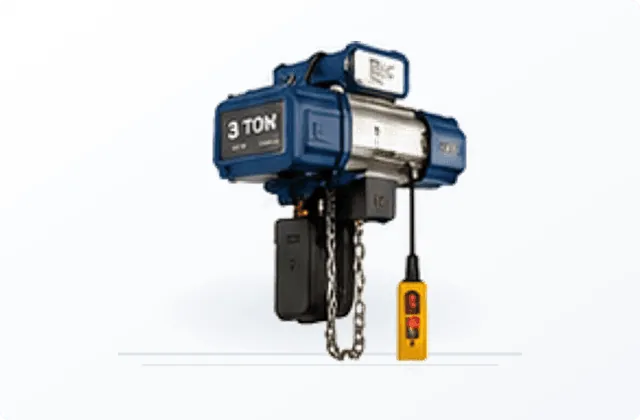
4. Choose the Hoist Type Around the Project
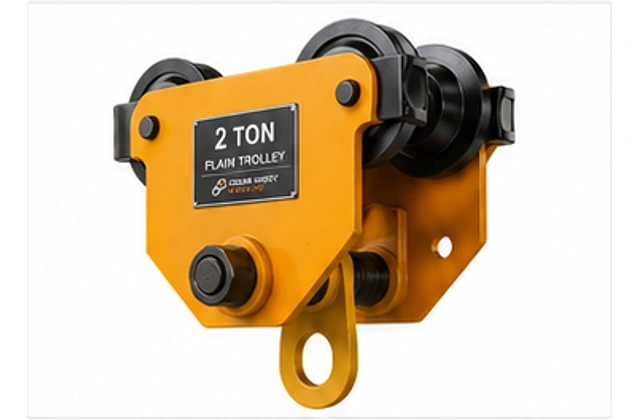
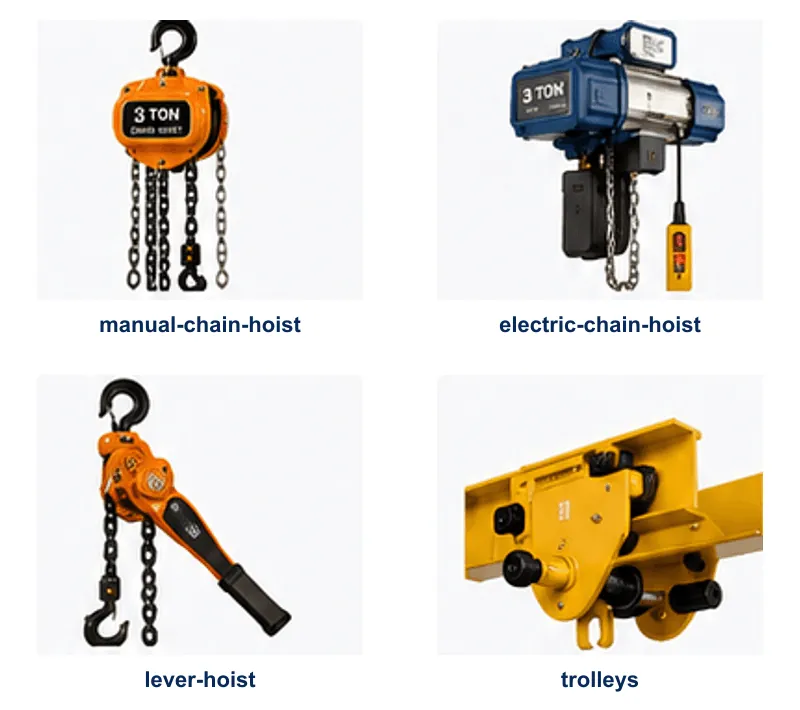
Capacity is only one part of the decision. Manual chain hoists are practical for occasional lifting, maintenance and sites without power. Electric chain hoists suit repeated lifts, higher productivity and production work. Lever hoists are compact for pulling, tensioning and positioning. Trolleys add horizontal movement along a beam, but the beam and trolley must also match the load.
If the project needs frequent lifting, long travel or several operators, an electric model with the same rated capacity may be safer and more productive than a manual model that strains operators.
- Manual chain hoist: lower frequency and flexible use.
- Electric chain hoist: repeated lifting and faster cycles.
- Lever hoist: pulling, alignment and field positioning.
5. Check Lift Height, Headroom, Beam and Power
Before ordering, confirm the full installation picture: lifting height, headroom, hook-to-hook distance, beam width, suspension method, indoor or outdoor use, voltage, control method, chain container, packaging, nameplate language and inspection requirements. These details can change the correct model even when the tonnage is already known.
For export and distributor projects, share the target market and common local capacities. A project mix of 1T, 2T, 3T and 5T may be better for inventory than one large capacity that does not match actual customer demand.
- Check that the support structure has suitable capacity.
- Confirm beam width before selecting a trolley.
- For electric hoists, confirm voltage and control requirements.
6. Ask the Factory for Proof, Not Just Price
A valuable quote should include more than a unit price. Ask the supplier to confirm rated capacity, lifting height, chain fall arrangement, load chain specification, hook type, brake system, test procedure, certificates, spare parts, packaging and lead time. For special projects, ask whether the factory recommends a larger capacity class or a different hoist type.
This article is a selection guide, not a replacement for the manufacturer manual, local regulations or a qualified lifting plan. When people, critical assets or unusual rigging are involved, use a competent lifting engineer and follow the stricter rule.
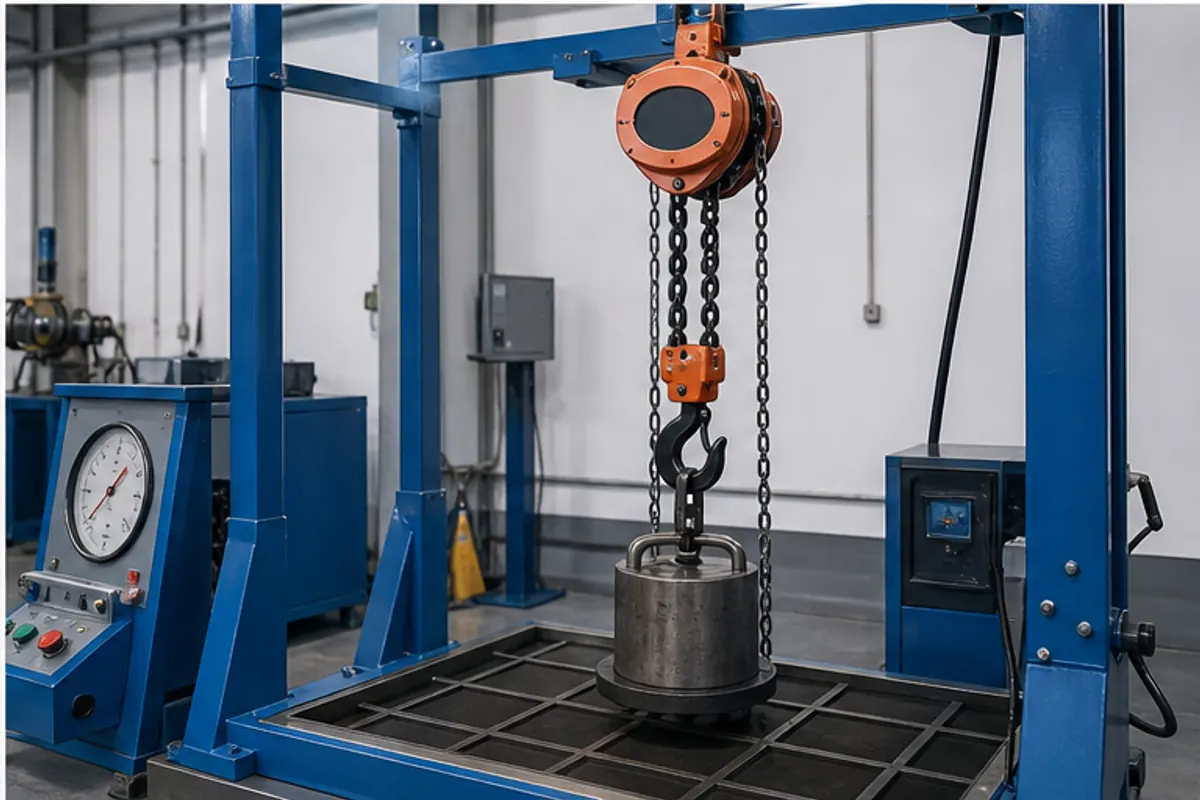
- Request load-tested products and clear nameplates.
- Keep capacity, serial number and inspection records.
- Use qualified personnel for unusual, tandem or critical lifts.
Project Chain Hoist Capacity Matrix
Use this table as a practical first screen for common industrial projects. Final selection should be checked against the exact lifted weight, rigging plan, support structure and local safety rules.
| Project Load | Recommended Capacity | Project Note |
|---|---|---|
| Up to 450 kg total | 0.5T | Light workshop parts, small pumps, maintenance kits and controlled low-frequency lifting |
| 451-900 kg total | 1T | Warehouse handling, machine repair and small equipment installation |
| 901-1,800 kg total | 2T | Motors, molds, steel parts and general factory maintenance |
| 1,801-2,700 kg total | 3T | Variable loads, heavier fixtures, construction work or frequent lifting near 2T |
| 2,701-4,500 kg total | 5T | Heavy manufacturing, structural steel, large equipment and demanding project use |
| Above 4,500 kg | Engineering review | Confirm hoist, trolley, beam, rigging method, support structure and lift plan together |
Project Sizing Checklist
Add the object, rigging, fixture, packaging and below-the-hook accessories.
Choose a capacity above the total load, then step up for uncertainty or repeated use.
Match capacity with frequency, lift height, travel distance and operator workload.
Check headroom, beam width, support structure, voltage, dust, humidity and outdoor exposure.
FAQ: Choosing Chain Hoist Capacity for a Project
How do I choose the right chain hoist capacity for my project?
Calculate the total lifted weight including the load and all rigging accessories. Choose the next standard chain hoist capacity above that number, then step up if the lift is frequent, uncertain, harsh, near capacity or critical.
What size chain hoist do I need for a 1.5 ton project load?
A 2T chain hoist is normally the minimum if the complete lifted weight stays below 2 tons. If the project has changing loads, frequent lifts, heavy fixtures or poor site conditions, a 3T model may be the better choice.
Should I add a fixed safety margin such as 25 percent?
Do not treat a single percentage as a universal rule. The margin depends on load certainty, duty cycle, rigging, environment and local rules. The practical approach is to choose above the total lifted weight and step up when project risk increases.
Can I use two smaller hoists instead of one larger hoist?
Tandem lifting can be complex because load sharing is rarely perfect. It should be planned by qualified personnel with suitable equipment, rigging and controls. Do not use two small hoists as an informal substitute for the correct capacity.
What information should I send for a capacity quote?
Send load weight, rigging weight, lifting height, beam size, duty cycle, power supply, environment, quantity, target market and any nameplate or packaging requirements.
Want a project-specific capacity recommendation?
Send us your load weight, lifting height, duty cycle, beam details, site environment and quantity. Our team in Qingyuan, Baoding, Hebei will recommend a practical chain hoist capacity and product mix for your project.